Cotton period pads: Are they really better?
If you’ve been shopping for period pads in the last few years, you’ve probably noticed a shift. The aisle that used to be a wall of pastel plastic now has a bunch of beige, earthy-looking boxes promising “100% cotton,” “organic,” “natural,” and “skin-friendly.” Cotton pads are having a moment, and they’ve been positioned as the obvious upgrade over conventional pads.
But are cotton period pads actually better for your body? And if you’re not using cotton, what should you look for?
Let’s get into it.
What are cotton period pads, exactly?
“Cotton period pads” is a bit of a catch-all term. Most cotton pads on the market today fall into one of three buckets:
- Conventional cotton pads: Pads with some cotton in the construction, often blended with synthetic materials like rayon and a plastic backing. The “cotton” usually refers to the top sheet, not the full pad.
- Organic cotton period pads: Pads made with cotton grown without synthetic pesticides, often certified by GOTS (Global Organic Textile Standard). These are what most “clean” period brands sell.
- 100% cotton or “cotton core” pads: Pads that try to use cotton throughout, including the absorbent core, often without superabsorbent polymers (SAP).
The pitch is the same across the board: cotton is natural, breathable, biodegradable, and gentler on sensitive skin. And cotton is real. It’s a plant fiber, it’s familiar, and it’s been used for absorbent products for centuries.
But cotton listed in the ingredients doesn’t tell you very much about whether a pad is actually safer, cleaner, or more comfortable. Here’s what the research says:
Why people are turning away from conventional pads in the first place
Before we get to cotton specifically, it’s worth understanding why the ‘switch to cleaner pads’ conversation exists at all.
Here’s a fun fact: vulvar and vaginal tissue is significantly more absorbent than the skin on the rest of your body. Some research suggests that absorption rates from internal vaginal exposure may be 10 to 80 times higher than through skin elsewhere on the body. That means whatever is in your period product gets a much faster, more direct route into your system than, say, the lotion you put on your arm.
What kind of stuff are we worried about? Frankly, a lot. Independent testing over the last decade has flagged:
- PFAS (forever chemicals) in pads, tampons, period underwear, and liners. A widely cited Mamavation/EHN investigation reported on by the New York Times found PFAS in roughly 48% of sanitary pads tested.
- VOCs (volatile organic compounds) like toluene, xylene, and methylene chloride. A 2020 review found that menstrual pads had some of the highest VOC-related hazard ratios among feminine hygiene products tested.
- Phthalates and dioxins linked to fragrance, plastic components, and chlorine-bleaching residues.
- Heavy metals, such as arsenic and lead, including in some products labeled “organic.”
This is the backdrop against which cotton started to get trendy. But cotton in and of itself is not necessarily free of any of these contaminants, especially when you start to examine how it’s grown and processed en route from plant to wearable fiber. Let’s take a closer look.
The case for cotton pads (and where it falls short)
What cotton does well
Cotton is a natural fiber. It’s soft, breathable, biodegradable, and free from the synthetic-fiber concerns associated with materials like conventional rayon blends. GOTS-certified organic cotton, in particular, is grown without synthetic pesticides and is subject to residue testing through the supply chain. That’s a meaningful improvement over a lot of conventional period products.
For people with very sensitive skin, switching from a fragranced, plastic-coated conventional pad to an unscented organic cotton pad can absolutely make a noticeable difference. That part isn’t hype.
Where the cotton story gets more complicated
Here’s what you won’t see in marketing materials for cotton pads:
Cotton is the most chemically-intensive crop on the planet: Conventional cotton occupies just 2.4–2.5% of the world’s arable land but accounts for roughly 16% of global insecticide use and 6% of all pesticide use, according to the Environmental Justice Foundation.
The UN Environment Programme estimates cotton cultivation consumes around 200,000 tons of pesticides and 8 million tons of fertilizers globally each year. That’s why conventional cotton pads aren’t automatically the earth-friendly option people assume.
Pesticide residues can show up in finished cotton products: A 2024 study by the Women’s Environmental Network (WEN) and Pesticide Action Network UK, titled Blood, Sweat, and Pesticides, tested 15 boxes of mainstream non-organic tampons sold in UK supermarkets. Researchers found glyphosate (a weed killer the World Health Organization’s IARC classified as a probable human carcinogen in 2015) at levels 40 times higher than what’s legally permitted in UK drinking water.
A separate preliminary study from researchers at the University of La Plata in Argentina detected glyphosate and its breakdown product AMPA in 85% of tampon, pad, wipe, and gauze samples tested. So while organic cotton is meaningfully cleaner, “cotton” on its own isn’t a guarantee of anything. Unless a pad is certified organic (and ideally tested for residues), it could be carrying pesticide load.
Cotton holds moisture against your skin: This is the one that gets glossed over the most. Cotton is absorbent, but it isn’t very absorbent compared to modern superabsorbent polymers, and it doesn’t lock moisture away from the skin. Cotton tends to hold fluid in the fibers themselves, which means a pad with a cotton core can feel damp against your vulva even when it isn’t “full.”
That matters because heat plus moisture against vulvar skin is the recipe for irritation. Dermatology research consistently identifies friction, moisture, and trapped heat as primary drivers of vulvar contact dermatitis from pads, separate from any specific chemical irritant. A pad that feels wet for hours is a pad that can cause rashes, even if its ingredient list is clean.
“All cotton” pads often skip the structural materials that make pads actually work: Pads need a waterproof backing to prevent leaks. They need adhesive to stay put. They need wings, channels, or shaped construction to fit a body that moves. Some 100%-cotton pads compromise on those, which is part of why so many “clean” pad reviews mention bunching, shifting, and leaks. (Sound familiar? Flex founder Lauren wrote about exactly this experience before we developed our own line.)
The honest bottom line on cotton
Organic cotton pads are a real upgrade over conventional ones, especially if your previous pad had fragrance, dyes, or wasn’t tested for PFAS. But cotton by itself is not a synonym for safer, more absorbent, or more comfortable. It just means cotton.
The actual question worth asking isn’t “is this pad made of cotton?”
It’s “what’s in this pad, what isn’t, and does it perform the way I need it to?”
What Flex Pads are made of (and why we didn’t go with a cotton core)
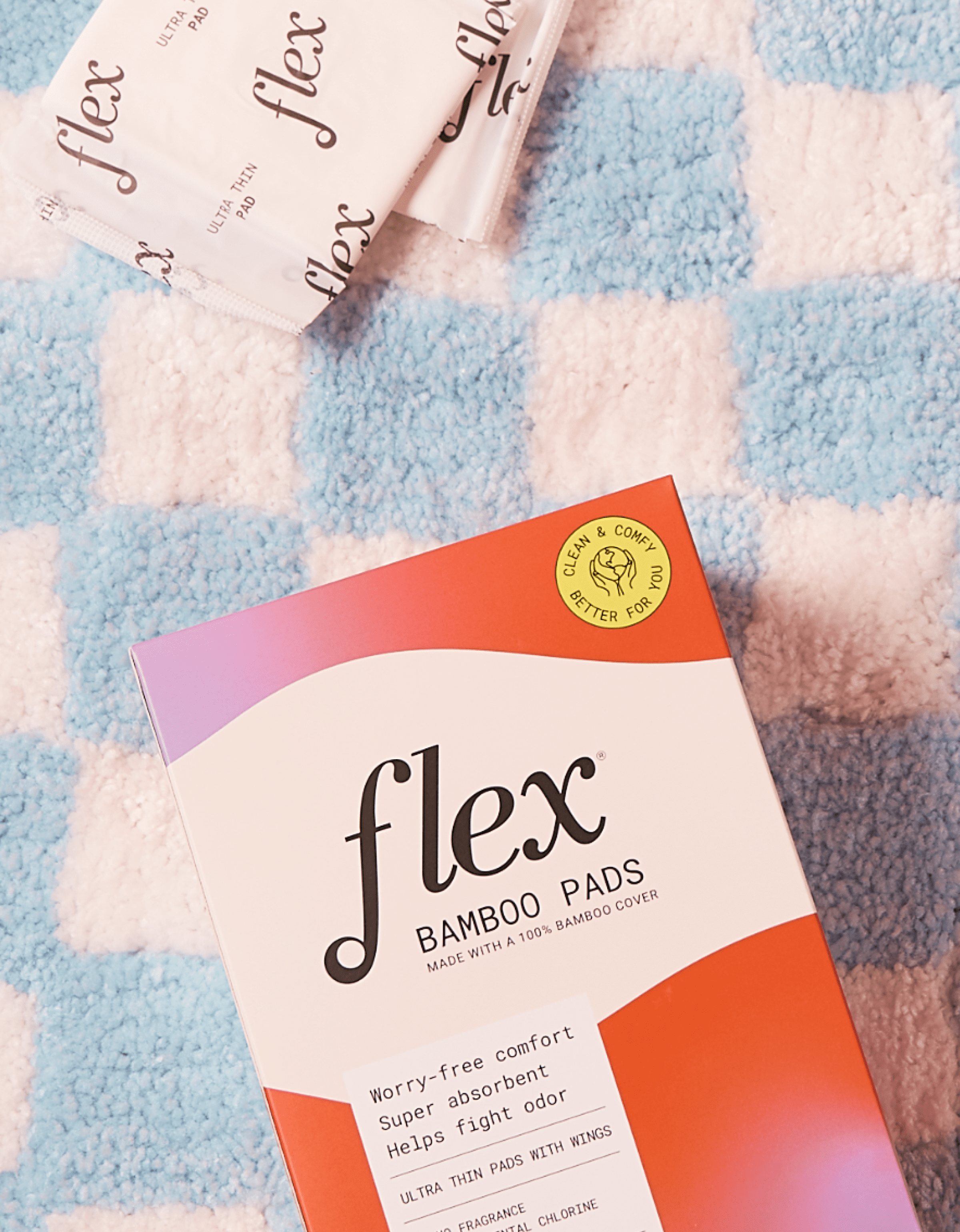
When we built Flex Ultra Thin Pads, Flex Ultra Thin Super Pads, and Flex Daily Liners, we looked at the same research above and made some specific choices.
A plant-derived top cover, not a fully cotton one: The layer touching your skin is plant-derived, soft, breathable, and moisture-wicking. It’s designed to move fluid away from your vulva quickly, instead of holding it against your skin the way cotton can.
A premium Japanese superabsorbent core: The absorbent core uses Sumitomo SAP, a high-grade superabsorbent polymer that pulls fluid in and locks it down inside the pad. This is what allows Flex Ultra Thin Pads to absorb 2x more than other leading brands while staying ultra-thin. It’s also what keeps your skin dry, which is one of the biggest factors in preventing irritation, period rash, and bacterial overgrowth (lots of bacteria = odor).
A clean ingredient profile, independently verified:
Flex Pads & Liners are:
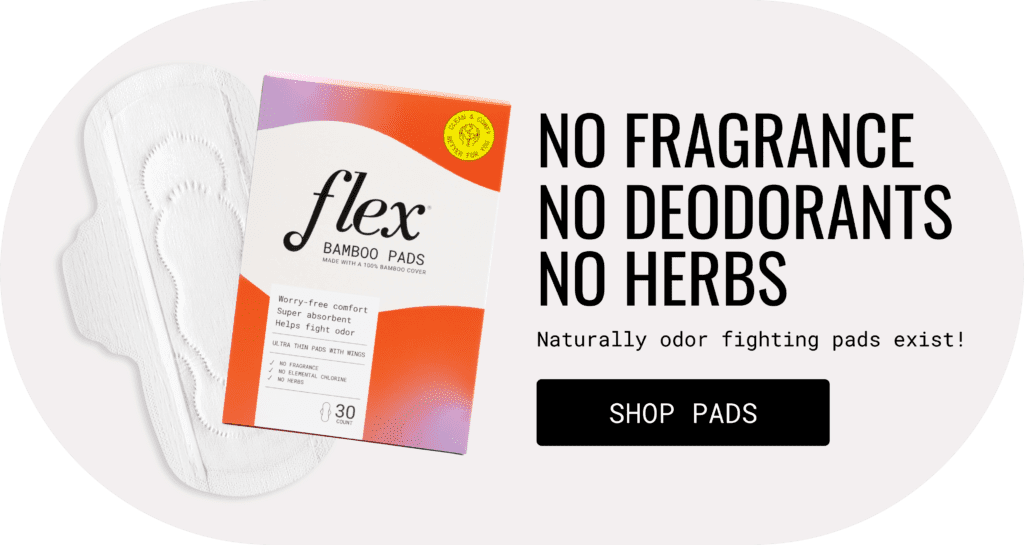
- Free from fragrance, deodorants, herbs, and dyes
- Free from elemental chlorine and pesticides
- Free from PFAS (forever chemicals), independently lab-tested
- Hypoallergenic and dermatologist-tested
Built for performance: Five ultra-thin layers, leak-locking channels, stay-put wings, and a 240mm (9.44”) length with up to 100mL absorbency. Liners come in at 180mm (7.08”) with up to 10mL absorbency for daily backup, drips, discharge, or pairing with a menstrual disc or cup.
We went this route because the goal isn’t to win a “made of cotton” marketing checkbox. The goal is a pad that’s safe and functional, so you don’t have to worry about your period.
It protects against leaks, doesn’t leave moisture on your skin, doesn’t contain the additives linked to vulvar irritation and long-term health concerns, and feels comfortable enough that you forget you’re wearing it.
How to actually evaluate a pad (cotton or not)
If you’re trying to make a smarter pad choice, here’s what to look for instead of stopping at the word “cotton”:
- Fragrance and herb-free. Both are common irritants. Even “natural” herbs like aloe and chamomile can trigger reactions on sensitive vulvar skin.
- PFAS-tested, with results published or available on request. “Free from forever chemicals” should be backed by independent lab data.
- Free from dyes, elemental chlorine, and added deodorants.
- A breathable, moisture-wicking top layer, whether that’s organic cotton or another plant-derived material. The key is what happens to the moisture, not just what the cover is called.
- Real absorbency claims with real numbers (mL or g), not just “heavy” or “overnight.”
- Hypoallergenic and dermatologist-tested, especially if you have sensitive skin or a history of contact dermatitis.
And one more thing worth saying out loud: the regulatory gap around period products is real. In the US, pads and tampons are regulated as medical devices by the FDA, but there are no mandatory tests for pesticide residues, PFAS, or many chemical contaminants in finished products. That’s why independent testing and brand transparency matter so much. If a brand isn’t willing to publish what’s in their pad, that’s information too.
Period pads FAQs
Are organic cotton pads better than regular pads?
Generally, yes, if “regular” means fragranced, conventional pads with synthetic blends. Organic cotton pads avoid synthetic pesticide residue and typically skip fragrance and dyes. But organic cotton alone doesn’t guarantee absorbency, dryness, or freedom from things like VOCs.
Are Flex Pads made of cotton?
No. Flex Pads use a plant-derived top cover (not cotton) and a premium Japanese SAP core for absorbency. The choice was about keeping moisture off your skin and locking it into the pad, which cotton fiber doesn’t do as effectively.
Are Flex Pads tested for PFAS?
Yes. Flex Pads & Liners have been independently lab-tested and confirmed free of PFAS (forever chemicals).
Can I sleep through the night with Flex Pads?
Yes. We recommend changing every 4 to 8 hours, but Flex Ultra Thin Super Pads are built to last overnight. Swap when you wake up.
Can I use Flex Pads or Liners as backup with a disc or cup?
Absolutely. Lots of people layer products, especially on heavier days. A Flex Daily Liner is a popular backup with Flex Disc.
Can teens and pre-teens use Flex Pads & Liners?
Yes. Our pads and liners are for everyone, including first periods. (If you’re a parent navigating this, our guide on signs your daughter is about to start her period is a good starting point.)
The takeaway
Cotton pads got popular for a reason: people are paying more attention to what’s touching the most absorbent skin on their bodies, and they should be. But cotton is a fiber, not a guarantee. Conventional cotton can carry significant pesticide load, and even clean cotton pads can hold moisture against your skin in a way that contributes to irritation.
The pad that works for your body is the one that keeps your skin dry, leaves out the stuff that doesn’t belong near your vulva, and actually performs when you need it to. For us, that meant building Flex Pads & Liners around a plant-derived cover, a high-performance SAP core, and an ingredient list that’s free from fragrance, dyes, PFAS, and pesticides.
Try the lineup:
This article is informational only and is not offered as medical advice, nor does it substitute for a consultation with your physician. If you have any gynecological/medical concerns or conditions, please consult your physician.
© 2026 The Flex Company. All Rights Reserved.